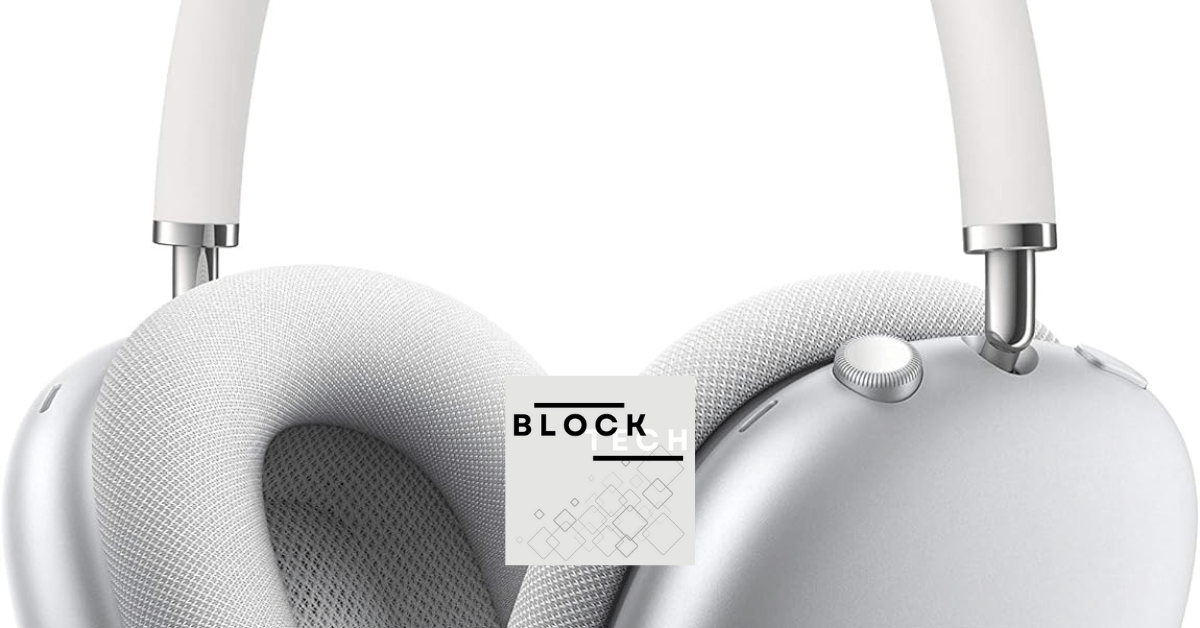
An AirPods Max buying guide now needs to distinguish three products that share a similar industrial design: the original AirPods Max 1 with Lightning, the 2024 AirPods Max 1 revision with USB-C, and AirPods Max 2. They differ in connector, chip, wireless technology, audio features, colors, and software requirements. An old review that treats every listing as the same model can send a buyer to the wrong cable, feature set, or generation.
This guide explains the differences using Apple’s current technical documentation. It does not claim a hands-on comparison, and the original Amazon destinations are preserved without asserting which generation a marketplace page currently selects. Before ordering, confirm the exact model name, connector, condition, seller, included accessories, and return policy.

AirPods Max buying guide: identify the generation first
| Model | Key identifiers | Important limitations |
|---|---|---|
| AirPods Max 1 (Lightning) | H1 chip in each ear cup; Lightning charging; original colors | Older connector; wired analog audio requires Apple’s supported Lightning cable |
| AirPods Max 1 (USB-C) | Introduced 2024; H1 chips; USB-C; newer colors; lossless/low-latency USB-C support with current software | Not AirPods Max 2; lacks H2-only features |
| AirPods Max 2 | H2 chip in each ear cup; Bluetooth 5.3; USB-C; Adaptive Audio, Conversation Awareness, Voice Isolation and other current features | Some functions require recent Apple hardware, software, languages, or regions |
Apple’s support pages use the names “AirPods Max 1,” “AirPods Max 1 (USB-C),” and “AirPods Max 2.” Marketplace pages may use shorter or inconsistent names. A USB-C port alone does not prove that a headset is Max 2 because the 2024 H1 revision also uses USB-C.
Design, materials, weight, and comfort
The AirPods Max design uses aluminum ear cups, telescoping arms, a stainless-steel headband structure, a knit mesh canopy, and magnetically attached cushions. The Digital Crown handles volume and playback, while a separate listening-mode button changes noise-control modes. This approach provides direct controls without a touch-sensitive outer panel.
Metal construction contributes to a premium feel but also considerable weight. Apple lists AirPods Max 2 at 386.2 grams. Fit is personal: the canopy distributes weight across the head, the cups rotate, and memory-foam cushions create a seal, but some listeners will still find the clamping force or mass tiring. Glasses, hairstyles, heat, and ear shape can affect both comfort and acoustic seal.
Try the headphones for an extended period within the return window rather than judging comfort in a few minutes. Cushions can be replaced, but that adds cost. The included Smart Case protects parts of the ear cups and triggers an ultra-low-power state; it is not a rigid travel case and does not protect the headband completely.
Sound and listening modes
All AirPods Max generations use Apple-designed dynamic drivers, Adaptive EQ, Active Noise Cancellation, Transparency mode, and spatial-audio features within supported Apple software. Sound perception depends on fit, seal, hearing, source, volume, equalization, and content. Terms such as “high fidelity” or “studio quality” are not a substitute for an audition, and Bluetooth playback remains subject to codec and wireless constraints.
Active Noise Cancellation is intended to reduce steady environmental sound, not create silence. Voice frequencies, sudden impacts, wind, and imperfect seals can remain audible. Transparency mode mixes outside sound into playback for awareness, but headphones should still be removed when safety requires full attention. Neither mode is hearing protection for industrial noise, concerts, tools, or firearms.
AirPods Max 2 adds H2-based features including Adaptive Audio, Conversation Awareness, Voice Isolation, Personalized Volume, and Loud Sound Reduction. Availability depends on compatible devices and current software. AirPods Max 1 owners should not expect those functions simply by installing a firmware update because the underlying chip differs.
Spatial Audio and Apple integration
Personalized Spatial Audio with dynamic head tracking can anchor supported movie, television, FaceTime, and music mixes relative to the device or listener. The effect depends on the source and individual preference; it does not convert every stereo recording into a native multichannel master. Head tracking can be adjusted or disabled.
Within the Apple ecosystem, AirPods Max can pair through an iCloud account, switch among compatible devices, work with Siri, show battery status, and participate in Find My features. Automatic switching is convenient when it selects the intended device and frustrating when it does not; connection settings can be adjusted per device.
The headphones can also operate as ordinary Bluetooth audio devices with non-Apple hardware, but Apple warns that functionality may be limited. Buyers primarily using Windows, Android, game consoles, televisions, or professional audio equipment should confirm microphone behavior, latency, wired compatibility, controls, and spatial features with that exact platform.
USB-C, Lightning, and wired listening
Connector differences are central to the purchase. Original AirPods Max 1 charges through Lightning. The 2024 AirPods Max 1 revision and AirPods Max 2 charge through USB-C. A generic passive cable is not necessarily sufficient for every analog source because the headphones require supported audio conversion.
Apple documents analog wired use with its supported Lightning-to-3.5mm cable for AirPods Max 1 (Lightning) and a USB-C-to-3.5mm audio cable for USB-C AirPods Max models. Apple also supports lossless audio and ultra-low-latency audio over USB-C for AirPods Max 1 (USB-C) and AirPods Max 2 when firmware, operating system, hardware, and cable requirements are met.
Lossless playback over a cable does not guarantee an audible improvement for every person or recording. It also does not turn the headphones into a passive analog set: the internal electronics remain involved. Check software requirements before buying specifically for USB audio, and remember that console voice chat or controller connections may have separate limitations.
Battery life and charging
Apple rates both the USB-C AirPods Max 1 and AirPods Max 2 for up to 20 hours of listening on a full charge with Active Noise Cancellation enabled. Five minutes of charging is rated to provide around 1.5 hours of listening. Actual runtime varies with volume, calls, listening modes, wireless conditions, age, temperature, and feature use.
The Smart Case places the headphones into an ultra-low-power state. There is no conventional power switch, so storage behavior differs from many competing over-ear models. Long-term lithium-ion capacity will decline. Avoid excessive heat, use compatible charging equipment, and obtain qualified battery service when runtime no longer meets needs. Our battery-life guide explains the same heat, charging, and chemical-aging principles.
Microphones, calls, and recording
Apple lists nine microphones on AirPods Max 2: eight used for noise cancellation and three for voice pickup, with overlap between those groups. Call quality still depends on wind, room reflections, network conditions, software, and the connected device. A boom microphone positioned near the mouth may remain a better choice for gaming, broadcasting, or calls in difficult environments.
AirPods Max 2 adds Voice Isolation and studio-quality audio recording within Apple’s supported workflows. Those terms describe Apple features and should not be interpreted as a universal replacement for dedicated microphones or an acoustically treated studio. Confirm app and device compatibility before relying on them for production.
Who benefits most from each version?
| Buyer | Version to consider | Reason to verify carefully |
|---|---|---|
| Existing Lightning-based Apple setup | AirPods Max 1 Lightning, if priced appropriately | Older connector and generation |
| Buyer wanting H1 design with USB-C | AirPods Max 1 USB-C | USB-C does not mean Max 2 |
| Buyer wanting current H2 features | AirPods Max 2 | Feature availability depends on software and device |
| Mostly Android or Windows user | Compare competitors as well | Apple-specific features may be limited |
| Traveler prioritizing low weight | Try before buying | Metal construction is relatively heavy |
| Console gamer | Verify exact console workflow | Bluetooth, microphone, and wired support vary |
For a compact outdoor speaker rather than private over-ear listening, see our JBL GO 3 guide. For voice-controlled bedside audio and alarms, the Echo Spot review covers a different listening use case.
Buying checks for new, used, or refurbished units
- Confirm “AirPods Max 1,” “AirPods Max 1 (USB-C),” or “AirPods Max 2”—not only “AirPods Max.”
- Check Lightning versus USB-C and compare the color with Apple’s official options.
- Verify seller, serial-number eligibility, warranty, condition, return policy, and included Smart Case and cable.
- Inspect used units for headband wear, cushion odor or compression, condensation residue, connection faults, damaged controls, and poor battery runtime.
- Be cautious of prices far below normal market levels; popular Apple products attract counterfeits.
- Pair and test ANC, Transparency mode, microphones, controls, wired audio, charging, Find My status, and account removal during the return period.
Care, cleaning, hearing safety, and accessibility
Over-ear headphones collect skin oil, moisture, hair products, dust, and fabric lint. Remove the magnetic cushions for cleaning only as directed by Apple, keep liquid away from openings, and allow every component to dry fully before reassembly or charging. Do not wear the headphones with the cushions removed. Condensation can form inside closed ear cups during exercise, travel, or rapid temperature changes, so inspect and dry them after humid use.
AirPods Max are not marketed as water- or sweat-resistant workout headphones. Heavy exercise may accelerate cushion wear and moisture exposure. Store them in a dry environment, avoid leaving them in a hot car, and do not compress the mesh canopy under luggage. A rigid third-party travel case can provide more physical coverage than the included Smart Case, although any accessory should avoid pressing controls or trapping moisture.
Noise cancellation can make a lower listening level more comfortable, but it does not make high volume safe. Use Apple’s Headphone Levels and hearing features to monitor exposure, and reduce volume or duration when alerts indicate elevated levels. Do not use isolation modes where situational awareness is essential, including traffic, machinery, or instructions from staff.
Apple lists Live Listen, Headphone Accommodations, and headphone-level features among AirPods Max accessibility tools. Their usefulness depends on hearing needs, source device, region, and software. They are not medical hearing protection or a substitute for evaluation by a qualified hearing professional. Users relying on accessibility functions should test the precise generation and device combination before the return period ends.
As an Amazon Associate, BlockTechBuzz earns from qualifying purchases. Both buttons preserve the article’s original affiliate destinations. Verify the selected model and generation on the destination page before buying.
Advantages and limitations
- Advantages: direct physical controls, effective integration with current Apple platforms, noise control, replaceable magnetic cushions, spatial-audio support, and wired USB-C capabilities on supported models.
- Limitations: relatively heavy construction, high cost, incomplete protection from the Smart Case, no conventional power switch, model confusion across generations, and reduced feature depth on non-Apple platforms.
Frequently asked questions
Are all USB-C AirPods Max models AirPods Max 2?
No. Apple introduced AirPods Max 1 with USB-C in 2024. It uses H1 chips. AirPods Max 2 uses H2 chips and adds a different feature set.
Can AirPods Max play lossless audio?
Apple supports lossless and ultra-low-latency audio through USB-C on AirPods Max 1 (USB-C) and AirPods Max 2 when the required cable, firmware, Apple hardware, and operating-system version are used. Ordinary Bluetooth playback is different.
Do AirPods Max work with Android and Windows?
They can function as Bluetooth headphones, but Apple-specific pairing, switching, spatial, Siri, recording, and account features may be limited or unavailable. Verify the intended workflow.
Verdict
AirPods Max remain most compelling for listeners who value over-ear noise control, physical controls, metal construction, and deep Apple-device integration. The buying decision is no longer a simple yes-or-no review: AirPods Max 1 Lightning, AirPods Max 1 USB-C, and AirPods Max 2 offer different connectivity and features. Identify the generation first, test comfort, and compare the actual listing price and warranty. The newest model is not automatically the best value, while a discounted older model is not a bargain if it lacks the connector or features the buyer needs.
Leave a Reply