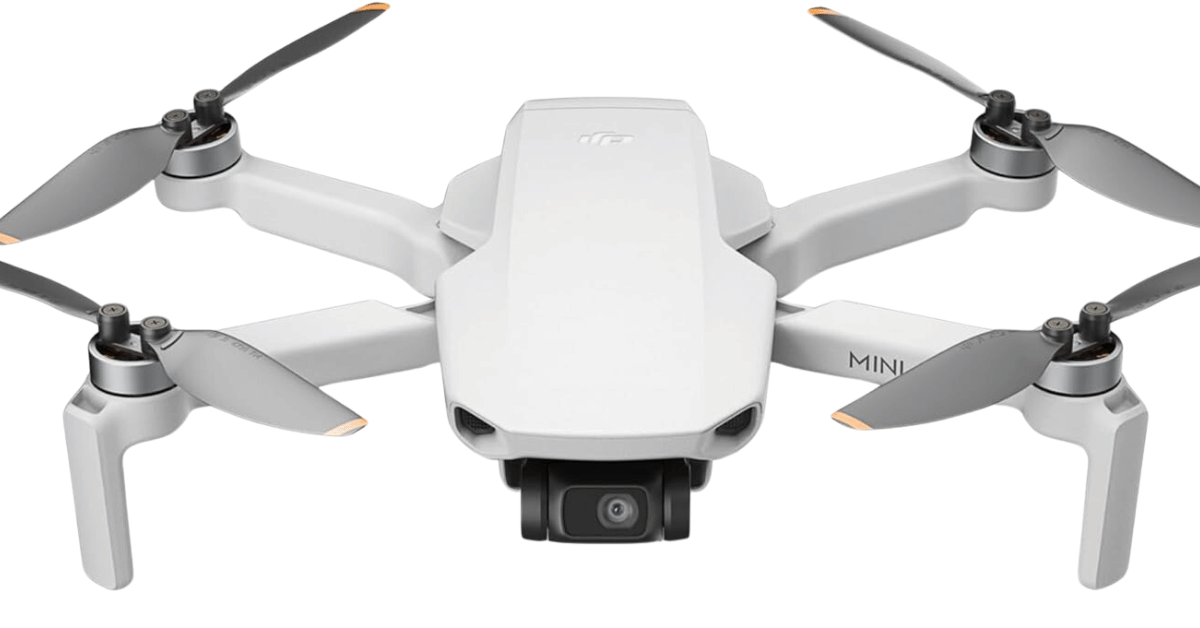
This DJI Mini 4K review examines the drone’s verified specifications, camera capabilities, flight limitations, safety features, and regulatory considerations. The Mini 4K is a foldable camera drone with a standard weight of about 246 g, a three-axis gimbal, and 4K/30 video. Its appeal is portability and straightforward aerial capture—not obstacle avoidance, professional cinema controls, or permission to fly beyond sight.

DJI Mini 4K review: key specifications
| Standard takeoff weight | Approximately 246 g, including battery, propellers, and microSD card; actual weight can vary |
|---|---|
| Camera | 1/2.3-inch CMOS sensor, 12 effective megapixels |
| Video | Up to 4K at 24/25/30 fps; 2.7K up to 60 fps; H.264 |
| Maximum video bitrate | 100 Mbps |
| Gimbal | Three-axis mechanical stabilization |
| Claimed maximum flight time | 31 minutes under DJI’s test conditions |
| Transmission | DJI O2; claimed maximum up to 10 km under FCC conditions and much less in other regulatory regions |
| Positioning | GPS, GLONASS, Galileo, downward vision, and infrared sensing |
| Obstacle avoidance | No forward, backward, or omnidirectional obstacle-avoidance system |
Maximum flight time and transmission distance are manufacturer measurements under controlled conditions. Wind, temperature, battery age, altitude, interference, firmware, flight speed, and regional radio limits affect real results. A claimed communication distance is not a safe route plan and does not override visual-line-of-sight rules.
Design and portability
The aircraft folds into a compact shape and weighs below 250 g in its standard configuration. That makes it easier to carry than larger camera drones and has regulatory significance in some countries. “Under 250 g” does not mean unregulated: operating rules still apply, and accessories can push the takeoff weight above the threshold.
The lightweight airframe also creates tradeoffs. It is easier to pack, but it has less mass to resist changing wind. DJI rates wind resistance at Level 5, yet pilots should assess actual gusts, direction, return distance, and remaining battery. A small drone flying downwind may have difficulty returning against stronger wind.
The folding arms, exposed propellers, gimbal, and camera all need inspection before flight. The product is not waterproof. Sand, moisture, impact damage, bent propellers, or a restricted gimbal can compromise control or footage. A rigid case and spare undamaged propellers are more useful than assuming the small body is disposable.
Camera and image quality
The Mini 4K uses a 12 MP 1/2.3-inch sensor and records 4K video at up to 30 frames per second. The three-axis mechanical gimbal stabilizes tilt, roll, and pan movement, producing a steadier horizon than electronic stabilization alone. For daylight landscapes, property overviews, travel scenes, and social video, that combination can produce useful results.
Limitations follow from the small sensor and simplified controls. Low light raises noise and reduces detail. High-contrast scenes can exceed the sensor’s dynamic range. There is no 4K/60 mode, and buyers who need advanced tracking, higher bit depth, larger sensors, or extensive obstacle sensing should compare more capable models.
- Use the lowest practical ISO: adequate light generally preserves more detail.
- Protect highlights: bright skies can clip before darker ground is properly exposed.
- Move gradually: smooth stick input complements the gimbal better than abrupt yaw.
- Check the lens: fingerprints and condensation are highly visible against bright skies.
- Use a compatible microSD card: sustained 4K recording requires adequate write performance.
Flight modes and automated shots
The DJI Fly app provides takeoff guidance, camera controls, telemetry, and automated QuickShots. Supported patterns such as Dronie, Rocket, Circle, Helix, and Boomerang can create repeatable movement without manually flying the complete path. They are convenience tools, not obstacle-detection features.
Before starting any automated move, inspect the entire path and allow more clearance than the preview suggests. The Mini 4K lacks front, rear, and side obstacle-avoidance sensors. Thin branches, wires, walls, people, and moving objects will not be reliably avoided. The pilot remains responsible throughout an automated sequence.
Return-to-Home can respond to a command, signal loss, or low-battery condition, but it is not a guarantee. The home point must be recorded correctly, the return altitude must clear obstacles, positioning must be adequate, and enough energy must remain. Pilots should never deliberately lose sight of the aircraft because Return-to-Home exists.

Battery life and range in practice
DJI’s 31-minute figure is a maximum measured under stated conditions, not a recommended airborne time. Takeoff, hovering, camera setup, wind, maneuvering, and a safe landing reserve reduce usable time. Cold batteries and repeated high-speed flight reduce it further. Land before the aircraft forces the decision.
The O2 transmission system supports a manufacturer-claimed maximum of 10 km under FCC conditions in an unobstructed, low-interference environment. Other regions use different power limits. Buildings, trees, terrain, radio congestion, and antenna orientation shorten the connection. More importantly, U.S. recreational rules require the aircraft to remain within visual line of sight or use a co-located visual observer in direct communication with the pilot.
For a different flight experience, compare the recently updated DJI Avata 2 FPV review. Avata 2 prioritizes immersive goggles-based flight and dynamic proximity footage; Mini 4K prioritizes low weight, longer claimed endurance, and conventional stabilized framing.
U.S. rules for a sub-250 g drone
Regulations depend on where and why the aircraft is flown. In the United States, a drone weighing 250 g or less generally does not require FAA registration when flown strictly under the recreational exception. That exception changes if the takeoff weight reaches 250 g, and non-recreational operations generally fall under Part 107 regardless of whether the flight earns money.
Every U.S. recreational flyer must pass the free Recreational UAS Safety Test (TRUST) and carry proof. Pilots must follow the safety guidelines of an FAA-recognized community-based organization, give way to crewed aircraft, comply with airspace authorization requirements, and fly at or below the applicable altitude limits. A sub-250 g aircraft is not exempt from those operating rules.
- Confirm the aircraft’s actual takeoff weight with accessories installed.
- Check controlled airspace, temporary flight restrictions, and local launch restrictions.
- Keep the drone within visual line of sight.
- Do not fly over people or moving vehicles without meeting the applicable rule.
- Determine whether the purpose is truly recreational before relying on the recreational exception.
BlockTechBuzz’s broader guide to drone technology and regulations provides more background, but current FAA and local sources control.
A safe first-flight workflow
- Prepare at home: update firmware, charge batteries, format or check the memory card, and review the manual.
- Inspect the aircraft: unfold the arms, remove the gimbal protector, check propellers, and clean sensors and lens.
- Check the location: confirm airspace, weather, people, animals, cables, trees, and a clear landing area.
- Wait for positioning: verify the home point and review Return-to-Home altitude before departure.
- Test nearby: hover at low altitude and confirm controls, video, satellite status, and battery behavior.
- Expand gradually: practice orientation and manual control before using complex QuickShots.
- Land with reserve: allow for wind and an alternate landing rather than exhausting the battery.
As an Amazon Associate, BlockTechBuzz earns from qualifying purchases. This does not affect the price you pay.
Who is the DJI Mini 4K for?
The Mini 4K suits beginners who will learn the rules and practice deliberately, travelers who value a small kit, and creators who need basic stabilized 4K aerial footage in good light. It can also serve as an affordable platform for learning composition, route planning, exposure, and battery management.
It is a weaker fit for indoor proximity flying, automated subject tracking, low-light work, high-frame-rate 4K, environments with many obstacles, or operations that require redundant safety systems. “Beginner-friendly” describes the interface and assisted flight, not a lack of pilot responsibility.
What to check before buying
DJI sells different bundles, and retailer listings may combine accessories in ways that make prices difficult to compare. Confirm the aircraft model, remote controller, number of Intelligent Flight Batteries, charging method, spare propellers, cables, gimbal protector, and bag. A low advertised price may cover only the basic kit, while a larger bundle may reduce the cost of batteries a buyer already intends to purchase.
Check phone compatibility with the DJI Fly app and the controller’s physical connector before relying on an older handset. Review storage requirements and obtain a microSD card from DJI’s supported list or one meeting the required sustained write speed. Confirm regional warranty coverage when importing; radio specifications, plugs, support, and return rights can differ.
Used aircraft need additional checks. Verify that the drone is removed from the previous owner’s account where applicable, inspect the gimbal and arms, look for swollen or damaged batteries, and ask about crashes, water exposure, repairs, and battery cycles. A short successful hover does not prove that the camera, navigation, radio link, or battery will behave correctly through a full flight.
Care, storage, and battery practice
After flying, remove dust and inspect propellers for chips, bends, or stress marks. Do not attempt to straighten a damaged propeller. Keep the gimbal protected during transport without powering the aircraft while the protector is installed. Store the drone dry and away from extreme heat, and follow DJI’s battery guidance for charging, transport, and longer periods without use.
Lithium batteries should not be used when swollen, leaking, punctured, or unusually hot. Let a warm pack cool before charging, use compatible equipment, and keep contacts clean. Before an important trip, perform a local test flight after firmware updates or extended storage. Maintenance cannot eliminate risk, but it can prevent avoidable failures.
Strengths and limitations
Strengths
- Compact 246 g standard configuration
- 4K/30 video and 12 MP photos
- Three-axis mechanical gimbal
- Useful QuickShots and Return-to-Home functions
- Up to 31 minutes under DJI’s controlled test
Limitations
- No multidirectional obstacle avoidance
- Small sensor limits low-light performance
- No 4K/60 recording
- Light airframe requires conservative wind decisions
- Automated modes still require a clear route
Frequently asked questions
Does DJI Mini 4K avoid obstacles?
It has downward sensing for positioning but no forward, backward, or omnidirectional obstacle-avoidance system. The pilot must inspect and monitor the flight path.
Does DJI Mini 4K need FAA registration?
In the United States, its standard 246 g configuration generally does not require registration when flown strictly under the recreational exception. Added weight, Part 107 use, or another operation type can change the answer. TRUST and operating rules still apply.
Can DJI Mini 4K fly for 31 minutes?
DJI lists 31 minutes as a controlled-test maximum. Real flights are shorter after wind, maneuvering, recording, temperature, and a safe landing reserve are considered.
Is the 10 km transmission figure a legal flight range?
No. It is a manufacturer measurement under specified FCC test conditions. Actual connection range varies, and pilots must obey visual-line-of-sight, airspace, and local operating rules.
Final assessment
DJI Mini 4K offers a useful combination of portability, stabilized 4K/30 video, and approachable controls. Its value depends on accepting what it does not provide: advanced obstacle avoidance, a large sensor, high-frame-rate 4K, or freedom from aviation rules. Used within those boundaries, it is a capable entry-level camera drone rather than the universal “tiny titan” suggested by the old promotional copy.
Creators comparing handheld and aerial systems may also find the DJI Osmo Action 3 guide useful. Confirm current compatibility, firmware, included accessories, and regional specifications on DJI’s official support pages before purchase.
Leave a Reply