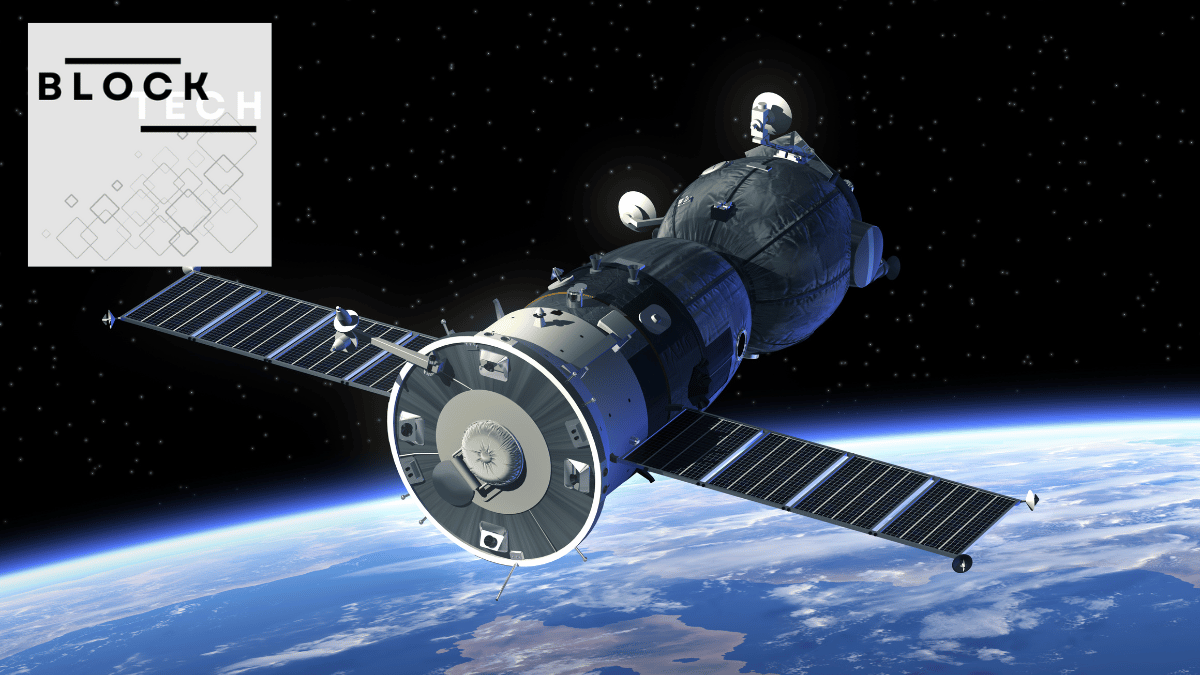
Blockchain in outer space? Yes, you read that right. Hedera Hashgraph, a leader in distributed ledger technology (DLT), is boldly going where no blockchain has gone before: orbit. In a groundbreaking partnership with WISeKey and SpaceX, Hedera is set to launch its technology into space in January 2025. Here’s an in-depth look at this high-tech odyssey. It reveals insights into the future of finance, technology, and space exploration.
The Mission: Launching Blockchain to Infinity and Beyond
Hedera Hashgraph’s journey into space is anchored in a collaboration with WISeKey. WISeKey is a Swiss cybersecurity and IoT company. The collaboration also includes SpaceX, the world’s preeminent space launch provider. WISeKey’s subsidiary, WISeSat, will deploy a next-generation satellite equipped with advanced semiconductor chips that are integrated with Hedera’s cutting-edge technology.
This isn’t your average satellite mission. The satellite will serve as a proof-of-concept to facilitate cryptocurrency transactions in space. The token of choice? SEALCOIN, a token built using Hedera’s Token Service. The ultimate goal is to enable secure, machine-to-machine (M2M) payments between satellites. It also includes spaceships and potentially even the International Space Station (ISS). Imagine a future where satellites autonomously transact with one another—science fiction is starting to look like science fact.
What Makes This Mission Revolutionary?
Let’s break down why this project is such a game-changer:
1. Blockchain Beyond Earth
Most blockchain applications are tethered to Earth. By deploying Hedera’s DLT in space, this mission seeks to demonstrate the feasibility of decentralized, secure transactions in extraterrestrial environments. This opens the door to new opportunities for space-based commerce and communication.
2. Cryptocurrency in Orbit
The ability to conduct cryptocurrency transactions in orbit is more than just a cool concept. It could lead to a revolutionary new payment network, laying the foundation for future space economies. Imagine spaceships paying for docking fees or satellites purchasing maintenance services from other satellites—all autonomously.
3. Enhanced Satellite Communication
WISeKey’s semiconductor chips embedded with Hedera’s technology will also test advanced secure communication protocols. This could redefine how satellites exchange data, potentially enabling more robust and tamper-proof communication networks in space.
The SEALCOIN Proof of Concept
At the heart of this mission lies the SEALCOIN proof of concept. The project will test the viability of securely exchanging Hedera tokens in orbit. While it’s currently focused on SEALCOIN, the implications extend far beyond a single token. This initiative could lead to a decentralized ecosystem in space. Blockchain could facilitate everything from data-sharing agreements to interstellar commerce.
Why Does This Matter?
Here’s why this mission is more than just a flashy PR stunt:
1. Setting New Standards for Blockchain Integration
By proving that blockchain can function effectively in space, Hedera is pushing the boundaries of what DLT can achieve. This could set a precedent for other projects to explore applications in space environments.
2. Expanding the Internet of Things (IoT)
This project aligns perfectly with the concept of the Transactional Internet of Things (TIoT). In the TIoT, devices—whether on Earth or in space—can transact and communicate autonomously. This is especially relevant for the burgeoning satellite industry, which increasingly relies on M2M interactions.
3. Inspiring Future Innovations
This mission could serve as a catalyst for other industries to consider space-based blockchain solutions. The possibilities are as vast as space itself. Whether it’s supply chain tracking for space missions or establishing decentralized data repositories on the moon.
Addressing the Misinformation
Let’s clear the air on some confusion surrounding this project. There have been rumors about Cardano and its founder, Charles Hoskinson, being involved. However, these are unrelated to Hedera’s mission with WISeKey and SpaceX. Hoskinson’s recent visit to SpaceX has sparked speculation, but it’s crucial to separate fact from fiction. The mission focuses entirely on Hedera and WISeKey. They are using DLT innovatively for satellite communication and transactions.
What Could the Future Look Like?
Picture this: A network of satellites orbiting Earth, conducting secure, automated transactions without human intervention. These satellites could handle everything from leasing bandwidth to exchanging scientific data, all powered by blockchain.
In the long term, the implications could go even further:
- Space Commerce: As space tourism and exploration grow, blockchain could facilitate everything from ticketing to supply chain logistics.
- Interplanetary Banking: Sending funds to a Mars colony? Blockchain could make it faster, cheaper, and more secure.
- Data Sovereignty: Space-based blockchain networks could protect sensitive data from geopolitical conflicts on Earth.
Challenges and Considerations
While the potential is immense, there are challenges to overcome:
- Technical Complexity: Integrating blockchain into space-based systems requires overcoming significant technical hurdles, from latency issues to radiation-hardened hardware.
- Regulatory Uncertainty: The legal and regulatory landscape for space-based commerce is still in its infancy. Clear frameworks will be needed to support these innovations.
- Scalability: Can blockchain handle the massive scale of a global—or even interplanetary—network? Solutions like Hedera’s low-energy, high-throughput model will be critical.
Conclusion: A Giant Leap for Blockchain
The Hedera-WISeKey-SpaceX partnership isn’t just about launching a satellite; it’s about launching a vision for the future. By demonstrating how blockchain can operate in space, this mission is pushing the boundaries of what’s possible. It’s a bold step toward a world where decentralized technologies govern Earth-bound systems. They also power the next frontier of human exploration.
So, what do you think? Is this the dawn of a new space economy? Or are we still a few light years away from realizing these possibilities? Whatever the answer, one thing is clear. Hedera isn’t just reaching for the stars. It’s aiming to connect them, one transaction at a time.
Also read: The Cutting Edge of Crypto AI: Insights from X Users – BlockTech


Leave a Reply