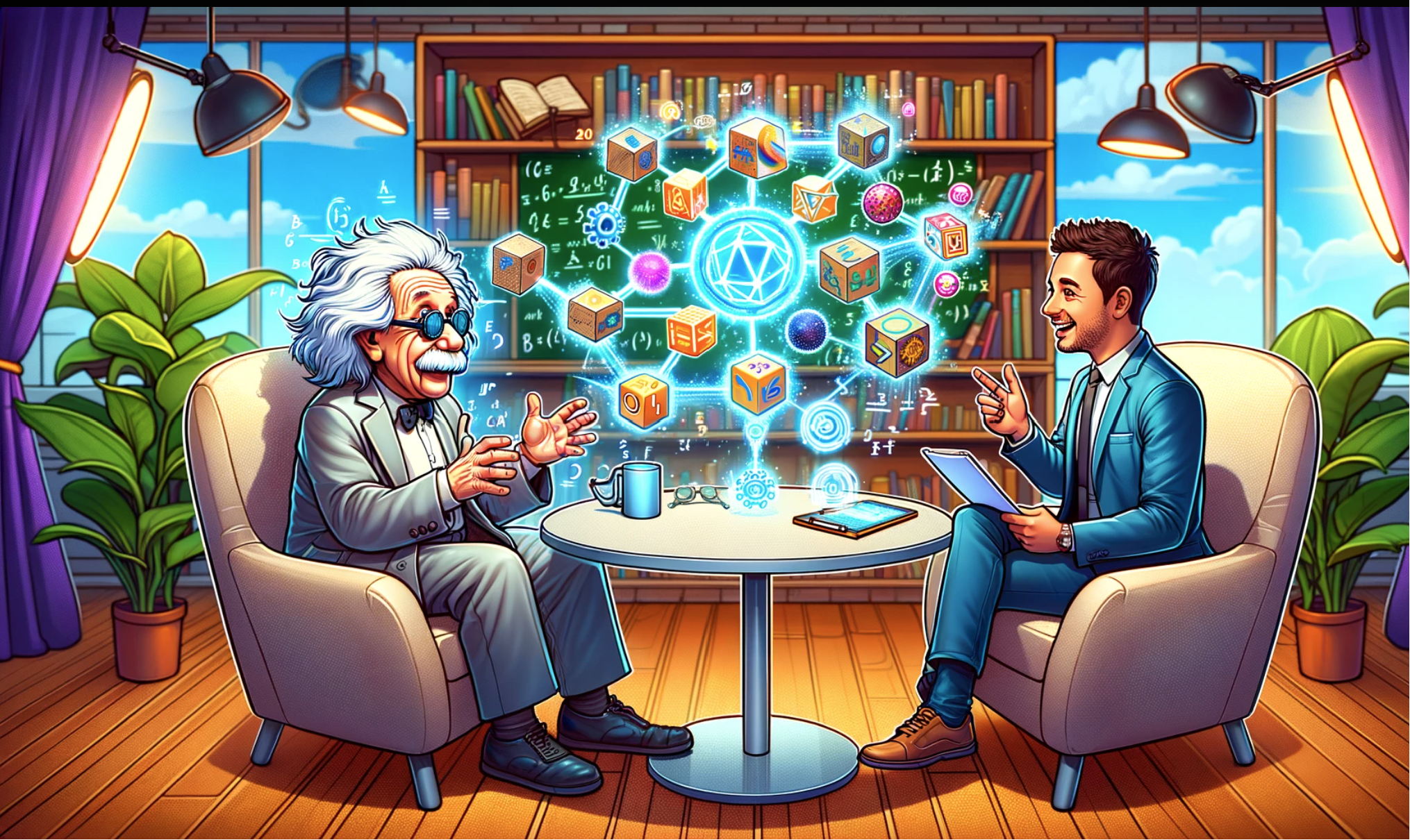
Imagine, if you will, the scenario where Albert Einstein, the man whose name is synonymous with genius and bad hair days, was alive today. What would he think of our modern marvels? More importantly, how would he wrap his mind around the concept of blockchain technology? Let’s dive into a fictional, yet highly entertaining, interview with Einstein, where we explore his thoughts on blockchain, cryptocurrency, and whether or not he would invest in Dogecoin.
Introduction to Blockchain for a Genius
First off, explaining blockchain to Einstein wouldn’t be a stroll in the park—not because he wouldn’t understand it, but because we’d have to do it justice. We’d start with the basics: “Mr. Einstein, imagine a ledger that is open for everyone to see, yet secure enough that no one can tamper with the information it contains.” After a brief pause, likely filled with a thoughtful squint, Einstein would probably retort with a witty remark about how in his days, the only blocks he cared about were the building blocks of the universe.
Einstein’s Hypothetical Take on Blockchain Technology
The Relativity of Trust
Einstein, known for his work on the theory of relativity, might find the concept of distributed trust and consensus mechanisms fascinating. “In the universe of blockchain, trust is not centralized but rather, relative to the consensus of its participants,” he might muse. This idea would likely appeal to Einstein’s dislike of concentrated power, reflecting his real-life advocacy for individual freedoms and skepticism of authority.
Quantum Entanglement and Cryptography
Diving deeper, we’d discuss blockchain’s use of cryptography. Einstein famously critiqued quantum mechanics with the phrase “God does not play dice,” showing his discomfort with randomness and probability governing physical laws. The deterministic yet secure nature of cryptographic methods used in blockchain might intrigue him. “So, you’re telling me there’s a way to ensure security without observing the state of a system directly? Fascinating!” he’d exclaim, drawing a parallel between quantum mechanics and cryptographic principles.
Blockchain: Beyond the Financial Spectrum
Moving on, our conversation would shift from the technical to the application of blockchain in society.
Decentralization and Democracy
Einstein, having witnessed the rise and fall of totalitarian regimes, would be intrigued by the potential for blockchain to empower individuals. “A technology that decentralizes power and fosters a more democratic form of governance? Tell me more!” he’d say, his eyes twinkling at the prospect of a tool that could potentially redistribute power in society.
The Environmental Conundrum
However, not everything about blockchain would impress him. The environmental impact of some blockchain networks, especially those relying on proof-of-work (PoW) consensus mechanisms, might draw his criticism. “Utilizing such vast amounts of energy for validating transactions? There must be a more efficient way,” he’d ponder, likely suggesting the exploration of alternative consensus mechanisms that are less energy-intensive.
Einstein’s Verdict on Cryptocurrency Investments
As our imaginary interview nears its end, the million-dollar question arises: Would Einstein invest in cryptocurrency?
A Risk Worth Taking?
“With every great innovation comes great uncertainty,” Einstein might begin, stroking his iconic mustache. “The volatility of these digital currencies reflects not just market speculation but the infancy of a revolutionary technology.” He’d likely view investing in cryptocurrency with cautious optimism, recognizing both the potential rewards and risks.
Dogecoin: To Invest or Not to Invest?
And what about Dogecoin, the cryptocurrency that started as a joke? “Ah, humor in the world of finance. How refreshing!” he’d chuckle. But would he invest? “Only if I could afford to lose those pennies,” he’d jest, with a twinkle in his eye, reminding us that even geniuses appreciate the value of a good laugh.
Conclusion: A Timeless Perspective on Modern Innovation
As we wrap up our whimsical interview, it’s clear that Einstein’s insights on blockchain would be as timeless as his contributions to physics. His curiosity for understanding the universe might very well extend to the digital cosmos of blockchain.
In our conversation:
- We learned that the decentralization and democratic potential of blockchain would likely fascinate Einstein.
- The environmental impact of certain blockchain technologies would concern him, prompting calls for more sustainable solutions.
- His approach to cryptocurrency investment would be measured, underscored by a healthy sense of humor regarding the volatility and speculative nature of the market.
So, there you have it—a playful exploration of what one of history’s greatest minds might think about one of the 21st century’s defining technologies. Though our interview with Einstein is purely imaginative, it serves as a reminder of the importance of viewing emerging technologies through a critical, yet open-minded, lens. Who knows? Maybe in some parallel universe, Einstein is making his mark on the blockchain world, one block at a time. Until then, we can only speculate—and perhaps, invest in a Dogecoin or two, just for the fun of it.


Leave a Reply