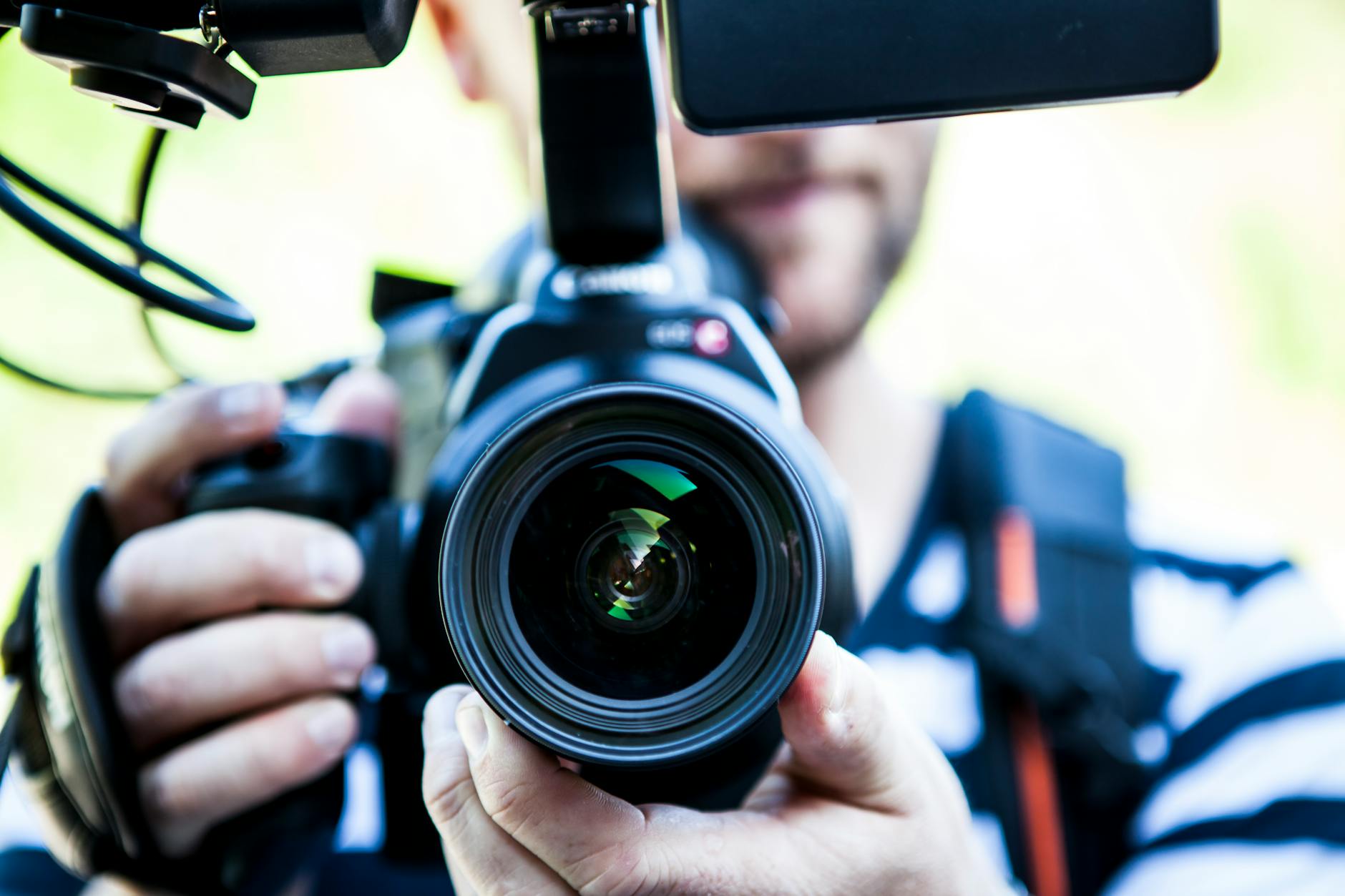
The world of cinema is no stranger to revolutions. From the advent of talkies to the CGI-laden blockbusters of today, film production has continuously evolved. But the latest protagonist in this saga of innovation doesn’t come with a script or a camera—it comes with algorithms. Artificial Intelligence (AI), once the fancy of science fiction, is now redefining the creative process in film production.
The AI Muse: Inspiring New Stories
Imagine a writer’s room where the brainstorming partner doesn’t tire, doesn’t run out of ideas, and isn’t afraid to suggest the outlandish. That’s what AI brings to the storyboard. With natural language processing, AI can generate storylines, characters, and dialogues, serving as a boundless fountain of inspiration for screenwriters. The software can analyze vast amounts of data—such as existing film scripts or novels—to identify patterns and suggest unique plot twists that may not be immediately apparent to the human mind.
Case in Point
Take the case of an AI that ingested hundreds of horror scripts and then created its own chilling story. The result was an unconventional narrative, weaving in elements that it identified as underrepresented in the genre, thus offering a fresh perspective that could potentially captivate audiences looking for something new.
Casting the Code: AI in Casting Decisions
Casting the right actors can make or break a film. AI helps directors and producers sift through countless auditions by analyzing the performances using facial recognition and emotion detection software. This tech doesn’t just match actors with roles based on physical attributes; it goes deeper, assessing how well their emotional range aligns with the characters’ arcs.
AI’s Supporting Role
In one groundbreaking instance, a film used AI to determine which auditions elicited emotional responses that mirrored those outlined in the script. By cross-referencing these findings with the actors’ previous work and audience reception, the production was able to make data-backed casting choices.
Visual Effects and Beyond: The Art of the Possible
Visual effects (VFX) are perhaps the most visible contribution of AI in film. But we’re not just talking about more convincing explosions or realistic creatures. AI is now an artist and a technician. Deep learning models can create photorealistic scenes and even simulate complex physical phenomena like water, fire, and smoke with frightening accuracy.
Revolutionizing Rendering
One AI-driven VFX software significantly reduced the rendering time of complex scenes. Traditionally, this process could take hours or even days. With AI optimization, the same task can now be accomplished in a fraction of the time, enabling VFX teams to iterate more rapidly and explore creative options that would have been impractical before.
Editing: The Cutting Edge
Editing is where the real magic happens, shaping hours of footage into a cohesive story. AI streamlines this process. It can sort through rushes, tag and categorize content, and even assemble rough cuts. Editors can then refine these AI-generated edits, ensuring the final product has the human touch that resonates with audiences.
An AI-Assisted Oscar?
An Oscar-winning film recently leveraged an AI-based editing tool to compile its initial cuts. The editor highlighted the AI’s efficiency in assembling scenes based on the emotional tone, pace, and narrative continuity—tasks that would have consumed valuable hours if done manually.
The Sound of AI: Scoring the Future
Creating a film’s score is a deeply artistic endeavor. However, AI is starting to play first chair in composing soundtracks as well. By analyzing existing scores and the film’s emotional beats, AI can generate compositions that directors can use as a starting point, expediting the scoring process and offering new auditory experiences for viewers.
The Unheard Symphony
An indie film recently featured a score co-composed by an AI. It analyzed the film’s themes and generated a unique soundscape that blended traditional orchestral sounds with electronic elements, providing the film with a signature auditory identity.
Ethical Intermissions: The Conundrum
With all this tech wizardry, ethical considerations are impossible to ignore. Questions about authorship and originality surface: if an AI writes a script, who is the true author? What about the actors who are digitally altered or even entirely generated by AI? As the line between human and machine creativity blurs, the industry must grapple with these questions to ensure fair recognition and remuneration.
Final Act: Embracing AI in Cinema
AI in film production isn’t about replacing humans; it’s about augmenting human creativity and pushing the boundaries of what’s possible. As filmmakers become more familiar with AI’s capabilities, we can expect even more inventive and immersive cinematic experiences.
As the curtain falls on this discussion, it’s clear that AI is not just a passing fad but a co-star in the making. With its potential only starting to be realized, the creative process in film production is set for an AI-driven transformation that will entertain, inspire, and challenge the status quo.
And if you’re intrigued by the confluence of technology and storytelling, don’t miss another fascinating article on how AI is revolutionizing gaming narratives, further exploring AI’s role in shaping the stories we love.
AI has already begun its role in the production of film, both behind the scenes and in the spotlight. The show is just beginning, and the audience is in for a breathtaking experience as AI continues to change the creative process in filmmaking. Lights, camera, algorithm!


Leave a Reply