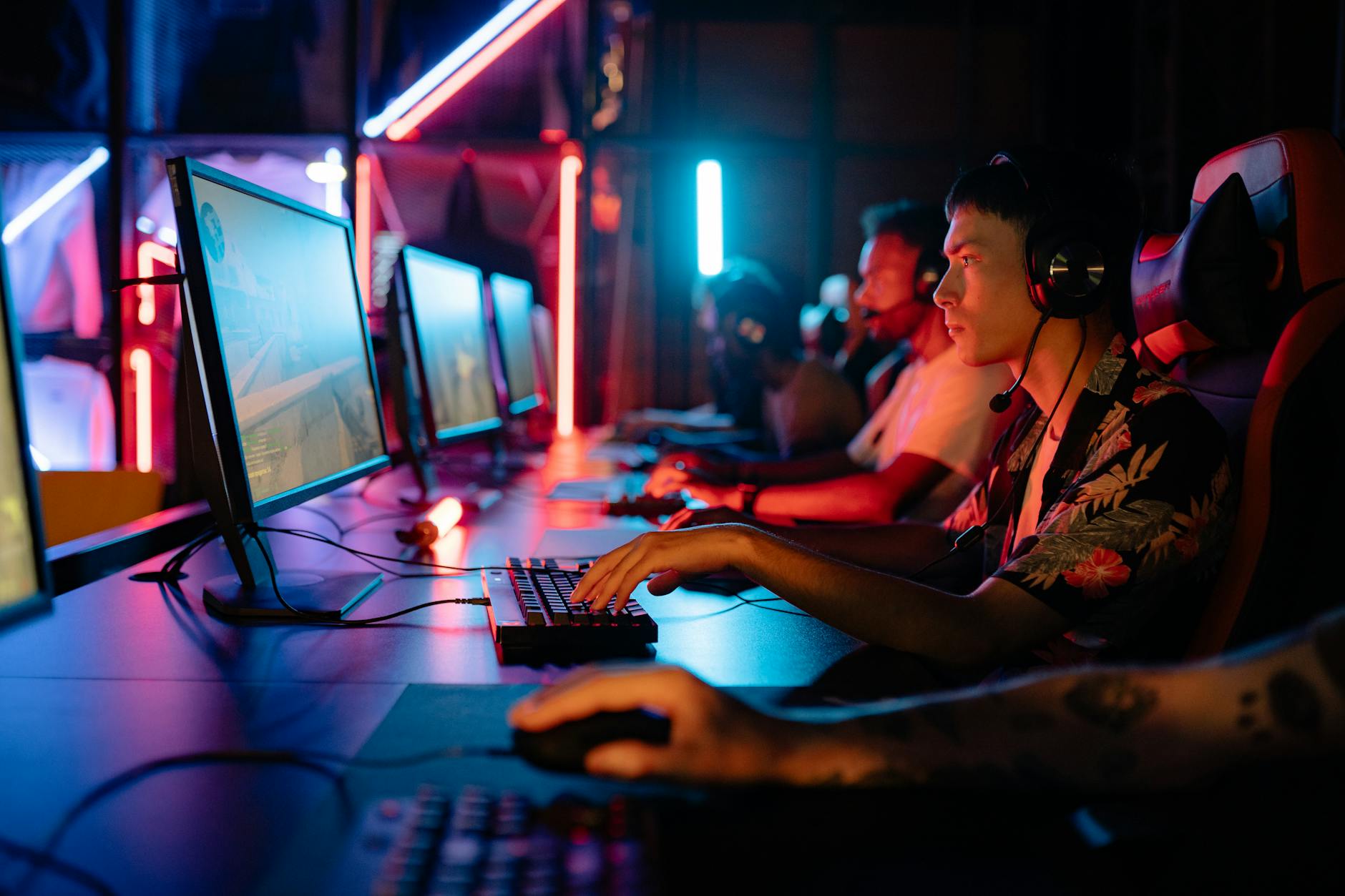
Esports live streaming turns competitive video games into real-time broadcasts for viewers on phones, computers, televisions, and game consoles. It includes publisher-run tournaments, independent productions, team channels, player streams, commentary, watch parties, and authorized co-streams. A successful broadcast requires more than sending gameplay to a platform: organizers must manage rights, production, moderation, accessibility, monetization, and audience trust.
This guide explains how platforms differ, how revenue models work, and how creators and tournament operators can build an audience without relying on stale forecasts or treating one platform’s current rules as permanent.
How esports live streaming works
A broadcast combines a game feed with commentary, graphics, cameras, interviews, replays, statistics, sponsor elements, and moderation. The program is encoded into digital video, sent to a platform or distribution service, and delivered at multiple qualities to viewers. Larger productions may create separate feeds for languages, regions, platforms, or co-streaming partners.
- Capture: obtain authorized game, observer, player-camera, microphone, and venue signals.
- Produce: mix video and audio, add commentary, graphics, replays, and accessibility services.
- Encode: compress the program at a supported resolution, frame rate, and bitrate.
- Distribute: send the feed to a platform, content-delivery network, or approved partner.
- Engage and moderate: manage chat, questions, community features, and safety incidents.
- Archive and analyze: create highlights, preserve authorized VODs, and review performance data.
Choosing a streaming platform
Twitch and YouTube are major global options, while other services may be important in particular regions or communities. Platform availability, esports partnerships, monetization programs, and product features change. Mixer closed in 2020, and Facebook ended its standalone Facebook Gaming app in 2022; both are reminders not to build a strategy around a supposedly permanent platform hierarchy.
| Evaluation area | Questions to ask |
|---|---|
| Audience fit | Where do viewers already follow the game, league, team, language, or creator? |
| Live experience | What latency, chat, clipping, replay, moderation, and accessibility tools exist? |
| Discovery | How are live channels, scheduled events, search results, and recommendations surfaced? |
| Archive value | Are VODs durable, searchable, editable, exportable, and suitable for highlights? |
| Monetization | Which programs are available in the creator’s country, and what are the current terms? |
| Operations | What ingest, analytics, rights-management, support, and redundancy options are provided? |
Multistreaming can broaden reach, but it adds moderation, analytics, sponsorship, and technical complexity. Review current platform agreements and event rights before sending one program to multiple destinations.
Broadcast rights come first
Owning a copy of a game does not automatically grant a right to rebroadcast a tournament, another creator’s stream, licensed music, team logos, or third-party video. Publishers generally control game intellectual property, and tournament operators may control event footage and data. Community-use policies can permit some activity while limiting commercial use, logos, restreaming, or sponsorship categories.
Co-streaming means an organizer authorizes selected creators or the public to rebroadcast an official feed, often with added commentary. Rules can differ by event and may specify platforms, delays, overlays, sponsor restrictions, conduct, or VOD availability. Check the current written policy for each competition rather than relying on permission granted for a previous season.
Twitch states that streamers are responsible for having rights to copyrighted material in live streams and stored videos. YouTube warns that live streams can be interrupted or restricted after copyright enforcement. Use game and music sources covered by the relevant licenses, keep agreements, and remove material when rights expire.
Production quality that matters
Stable, understandable video
Resolution is only one factor. Smooth motion, readable interfaces, sensible observer choices, and a stable connection often matter more than pushing the highest possible pixel count. Test the entire path from game server or venue to the viewer. Provide lower-bitrate renditions where the platform supports them.
Clear audio
Viewers need to understand commentators without game audio masking their voices. Balance microphones, game sound, remote guests, crowd noise, and music. Monitor the output feed rather than assuming the production console reflects the viewer’s experience.
Useful graphics and commentary
Score, series format, bracket position, player names, and objective state help new viewers follow the stakes. Commentary should explain why a decision matters, not merely repeat the screen. Our guides to the League of Legends World Championship and Dota 2’s The International show how game rules shape the viewing experience.
Accessibility and localization
Captions, transcripts, readable graphics, clear color contrast, and audio description of important visual information make a broadcast more usable. Automatic captions may require correction, especially for player names, game terminology, and excited overlapping speech. Provide schedule information with time zones and avoid placing essential information only in rapidly moving chat.
Localization is more than translating words. Regional teams need accurate terminology, names, cultural context, graphics, moderation, and rights to the feed. Organizers should give language partners clean audio or production elements when possible and publish which streams are official or authorized.
Moderation and community safety
Live chat can create belonging, but it can also amplify harassment, spam, impersonation, scams, spoilers, and hate. A tournament or creator should publish rules, appoint trained moderators, configure filters, and define escalation paths before going live.
- Limit links or new accounts during high-risk broadcasts when appropriate.
- Give moderators written guidance and a private coordination channel.
- Use slow mode, follower controls, timeouts, and bans proportionately.
- Protect players and staff from doxxing and impersonation.
- Document sponsor giveaways and never ask viewers for wallet recovery phrases or account passwords.
- Preserve evidence and contact the platform or authorities for credible threats.
Security practices for creator accounts, moderators, and production devices overlap with our home cybersecurity recommendations.
How esports streams make money
Revenue differs between an individual creator, a tournament organizer, a team, and a league. Platform access does not guarantee meaningful income, and gross revenue is not profit. Production labor, rights, travel, moderation, equipment, payment fees, taxes, and revenue sharing all affect the result.
- Advertising: platform-served or directly sold messages, subject to eligibility and advertiser rules.
- Subscriptions and memberships: recurring support with platform or channel benefits.
- Tips and platform tokens: voluntary viewer payments, often reduced by platform and payment fees.
- Sponsorships: integrated segments, naming rights, branded graphics, or campaign deliverables.
- Affiliate sales: commissions from tracked purchases with proper disclosure.
- Licensing and distribution: rights sold to media, language, or regional partners.
- Tickets and merchandise: event access, team products, or limited digital and physical goods.
Twitch’s current Affiliate tools include subscriptions, Bits, and advertising settings; YouTube monetization depends on its partner and channel policies. Terms, eligibility, availability, and revenue shares can change, so creators should use the current dashboard and agreement rather than a fixed number quoted in an old article.
Sponsorship disclosure and audience trust
The U.S. Federal Trade Commission says a material connection to a brand should be disclosed clearly and conspicuously with the endorsement itself. A platform’s built-in disclosure tool may not always be sufficient on its own. In a live stream, use language viewers can notice and understand; repeat the disclosure when audiences may join after the start, and include it visually and audibly when appropriate.
Do not make unsupported performance claims, hide paid relationships, or present a sponsor’s script as independent analysis. Disclose free products, payments, travel, affiliate commissions, employment, or other connections that could affect how viewers evaluate a recommendation.
Building an esports audience
Budgeting for a sustainable broadcast
Build a budget around the program viewers will actually receive. Typical costs include production staff, commentators, observers, remote contribution tools, graphics, captions, moderation, rights, music, connectivity, travel, equipment rental, insurance, storage, and post-production. Add contingency for replacement hardware and additional network capacity.
Separate committed revenue from projections. A sponsorship proposal, expected ad rate, or hoped-for subscription count is not cash already earned. Define payment timing, deliverables, make-good terms, cancellation rights, and who owns the resulting footage and audience data. Avoid promising viewer numbers that the production cannot substantiate.
For a small channel, consistency may matter more than elaborate graphics. Improve the weakest part of the viewer experience first—often audio, scheduling, moderation, or titles—before buying equipment that does not solve a measured problem.
There is no guaranteed formula and no single reliable global audience forecast. Growth is more useful when defined as returning viewers, relevant watch time, healthy participation, newsletter or schedule opt-ins, and repeat attendance—not one viral peak.
- Choose a clear promise. Examples include expert analysis, a regional language, a specific league, educational commentary, or community tournaments.
- Publish a reliable schedule. Use time zones and update cancellations in one obvious place.
- Create useful packaging. Accurate titles, thumbnails, descriptions, chapters, and clips help viewers understand the content.
- Make live content reusable. Turn authorized broadcasts into highlights, explainers, interviews, and searchable VODs.
- Collaborate with permission. Work with players, analysts, teams, and creators whose audiences genuinely overlap.
- Protect the community. Consistent moderation and honest commercial practices improve retention.
Esports distribution is part of a longer shift from local play to connected competition and media. See our video game history overview for that broader context.
Metrics that need context
| Metric | Useful for | Limitation |
|---|---|---|
| Peak concurrent viewers | Maximum live reach at one moment | Can overemphasize a short spike |
| Average concurrent viewers | Typical live audience during a period | Depends on duration and measurement method |
| Unique viewers | Estimated reach | Definitions and identity handling vary |
| Hours watched | Total consumption | Long events naturally generate more |
| Chat or clip activity | Participation and shareable moments | Volume does not equal positive sentiment |
| Returning viewers | Retention | Requires a consistent definition and privacy-aware tracking |
State the platform, region, time period, included channels, and whether co-streams are counted before comparing events. Third-party estimates and publisher figures may use different methodologies.
A pre-stream checklist
- Confirm game, event, music, logo, player-camera, and replay rights.
- Review current platform terms, monetization eligibility, and sponsor restrictions.
- Test video, audio, graphics, captions, latency, and backup connectivity.
- Brief commentators on names, format, disclosure language, and prohibited claims.
- Prepare moderation rules, escalation contacts, and scam warnings.
- Publish the schedule, time zone, authorized channel links, and accessibility information.
- Define which metrics will be collected and how long data and recordings will be retained.
Frequently asked questions
Which platform is best for esports streaming?
There is no universal winner. Choose based on audience location, rights, live features, discovery, archives, moderation, accessibility, support, and current commercial terms.
Can anyone co-stream a tournament?
No. Permission depends on the publisher, organizer, competition, region, and event-specific policy. Obtain and follow current written authorization.
Do large viewer numbers guarantee profit?
No. Revenue depends on geography, ad demand, agreements, conversion, sponsor value, and other factors, while costs can be significant.
Should every live stream become a VOD?
Only when rights and strategy support it. Music, event footage, guest permissions, or co-stream rules may limit archives. Edit captions and remove material whose rights do not cover on-demand use.
Conclusion
Esports live streaming succeeds when the broadcast is authorized, technically reliable, understandable, accessible, well moderated, and honest about commercial relationships. Platforms and monetization programs will keep changing. A durable strategy owns its audience promise, documents rights, measures meaningful retention, and gives viewers a reason to return beyond one tournament or viral clip.
Leave a Reply